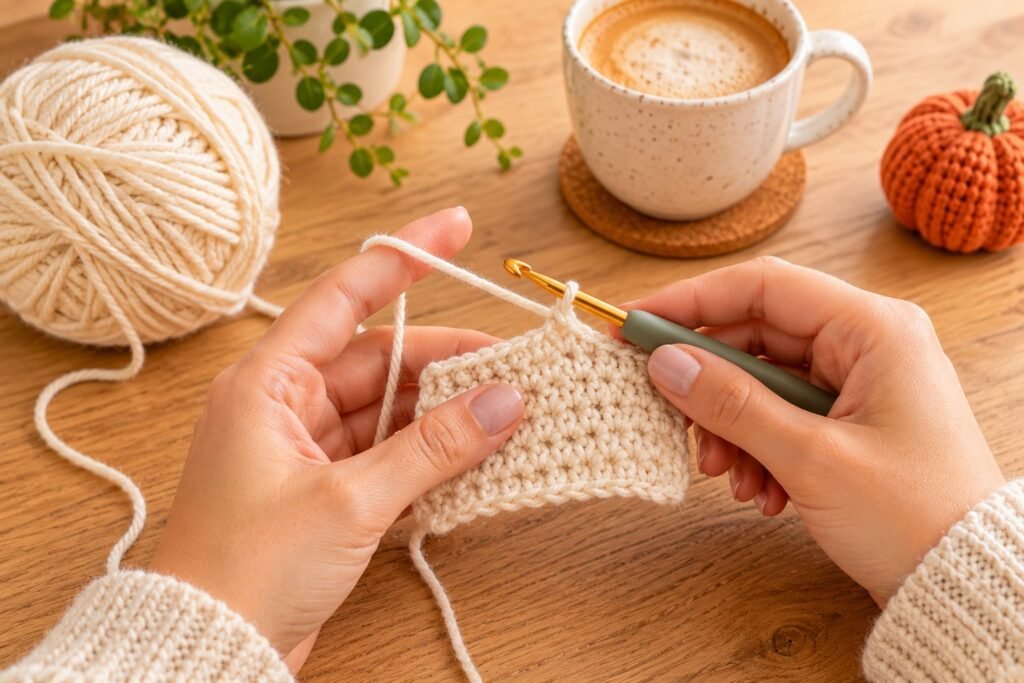
Want to learn how to crochet but don’t know where to start? You’re in the right place. In this beginner’s guide you’ll learn everything you need for your very first project: which hook and yarn to buy, how to hold them, the 6 basic crochet stitches, how to read a simple pattern, and an easy first project to practice on.
Crochet looks complicated, but it’s really just one hook pulling loops through other loops. Give yourself a few practice sessions and you’ll be amazed how quickly your hands remember the movements.
What You Need to Start Crocheting
- Yarn: a smooth, light-colored worsted weight (#4) acrylic or cotton yarn. Light colors make it much easier to see your stitches. (See our guide to the best yarn for beginner crochet and the Craft Yarn Council yarn weight chart.)
- Crochet hook: a 5.0 mm (H-8) hook is the perfect match for worsted yarn. An ergonomic handle is more comfortable for longer sessions.
- Scissors and a yarn needle (a large blunt needle to weave in ends).
- Stitch markers (optional, but helpful for marking the first stitch of a row).
How to Hold the Hook and Yarn
There’s no single “right” way — use whatever feels comfortable. Most beginners use one of these two hook grips:
- Pencil grip: hold the hook like a pencil, between your thumb and index finger.
- Knife grip: hold the hook like a knife, with your hand over the top of the handle.
With your other hand, wrap the working yarn (the yarn coming from the ball) over your index finger and hold the bottom of your work between your thumb and middle finger. Your index finger controls the tension — how tight or loose your stitches are. Relaxed, even tension is the goal.
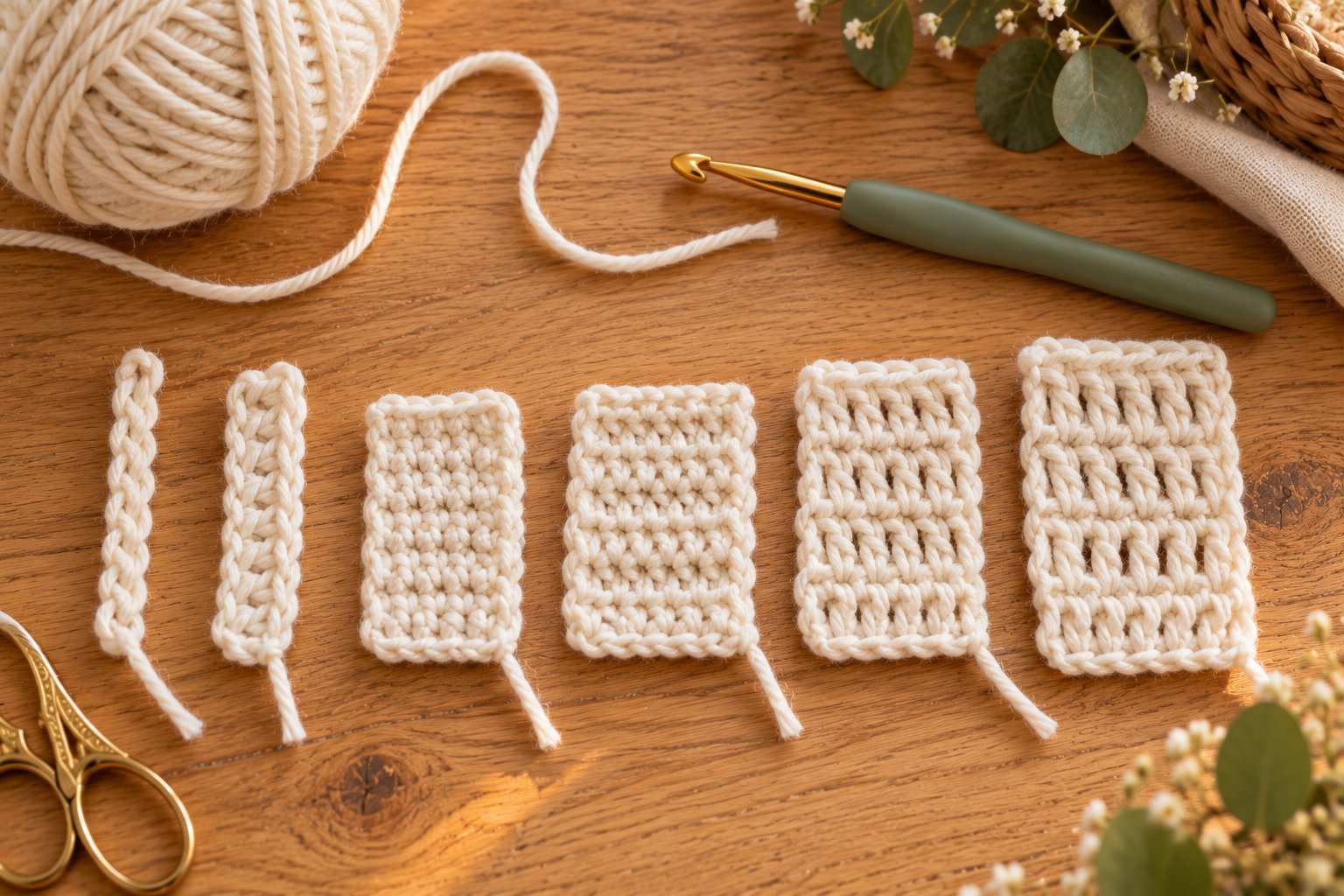
The 6 Basic Crochet Stitches
All stitches below use US crochet terms, which is what you’ll find in most English patterns online. (“YO” means yarn over: wrap the yarn over your hook from back to front.)
1. Slip Knot
The slip knot attaches the yarn to your hook. Make a loop with the yarn, pull the working yarn through the loop to form a new loop, place it on your hook and gently tighten. It should slide on the hook but not be loose.
2. Chain (ch)
The chain is the foundation of most projects. With the slip knot on your hook: YO, pull through the loop on your hook. That’s one chain! Repeat. Each “V” shape in your chain is one stitch. Tip: don’t count the loop on your hook or the slip knot.
3. Slip Stitch (sl st)
The flattest stitch, used to join rounds and move across stitches without adding height. Insert the hook into the stitch, YO, and pull through the stitch and the loop on your hook in one motion.
4. Single Crochet (sc)
A short, dense stitch — great for amigurumi, dishcloths and sturdy fabric. Insert the hook into the stitch, YO, pull up a loop (2 loops on hook). YO and pull through both loops. Done!
5. Half Double Crochet (hdc)
A medium-height stitch that works up quickly and has a cozy texture. YO, insert the hook into the stitch, YO, pull up a loop (3 loops on hook). YO and pull through all 3 loops.
6. Double Crochet (dc)
A tall stitch that makes soft, drapey fabric fast — perfect for blankets and granny squares. YO, insert the hook, YO, pull up a loop (3 loops on hook). YO, pull through 2 loops (2 loops left). YO, pull through the last 2 loops.
Turning Chains: How Many to Make
When you finish a row and turn your work, you make a few chains (a “turning chain”) to bring your yarn up to the height of the next row:
| Stitch | Turning chain | Counts as a stitch? |
|---|---|---|
| Single crochet | Ch 1 | No |
| Half double crochet | Ch 1 or ch 2 | Usually no (check your pattern) |
| Double crochet | Ch 3 | Usually yes |
How to Read a Crochet Pattern
- Abbreviations: patterns use short codes like ch, sc, dc. Good patterns list them at the start.
- Brackets and asterisks: instructions inside [ ] or after * are repeated as many times as stated, e.g. “[sc, ch 1] 5 times”.
- Stitch counts: the number in parentheses at the end of a row tells you how many stitches you should have — count often!
- Rows vs. rounds: rows go back and forth (you turn); rounds go in a circle (you don’t turn).
- US vs. UK terms: a UK “double crochet” is a US single crochet. Always check which terms a pattern uses (see our US vs UK crochet terms chart).
Your First Project: Easy Dishcloth
A dishcloth is the perfect first project: small, useful and forgiving. Use 100% cotton worsted yarn and a 5.0 mm hook.
Foundation: Ch 31.
Row 1: Sc in 2nd ch from hook and in each ch across. Ch 1, turn. (30 sc)
Row 2: Sc in each st across. Ch 1, turn. (30 sc)
Repeat Row 2 until your dishcloth is square (about 30–34 rows). Fasten off: cut the yarn, leaving a 6 in tail, YO and pull the tail all the way through the loop. Weave in both ends with a yarn needle.
Once you’re comfortable, make a second one in hdc or dc to practice the taller stitches!
Common Beginner Mistakes (and How to Fix Them)
- My edges are wonky / my piece gets narrower. You’re probably skipping the last stitch of the row (it hides under the turning chain). Use a stitch marker in the first and last stitch.
- My piece gets wider. You may be working into the turning chain by mistake, adding extra stitches. Count every row.
- My stitches are too tight. Relax your grip and let the yarn flow over your finger. Make sure each loop goes onto the thick part (shank) of the hook, not the narrow throat.
- My chain is too tight to work into. Make your foundation chain with a hook one size larger.
- I can’t see my stitches. Switch to a lighter, smoother yarn and work in good light.
Found a mistake or stuck on a step? We check every stitch count carefully, but crochet is personal and tension varies. If something doesn’t work out for you, tell us here — we read every message and update our patterns.
Frequently Asked Questions
Is crochet easier than knitting?
Many people find crochet easier to start because you only work with one hook and one active loop at a time, so it’s harder to drop stitches.
How long does it take to learn to crochet?
Most beginners can make a chain and single crochet in their first session, and finish a simple dishcloth or scarf within a week of short practice sessions.
Should I learn left-handed?
If you’re left-handed, crochet left-handed if it feels natural — all the stitches work the same, just in a mirror image.
What should I make after a dishcloth?
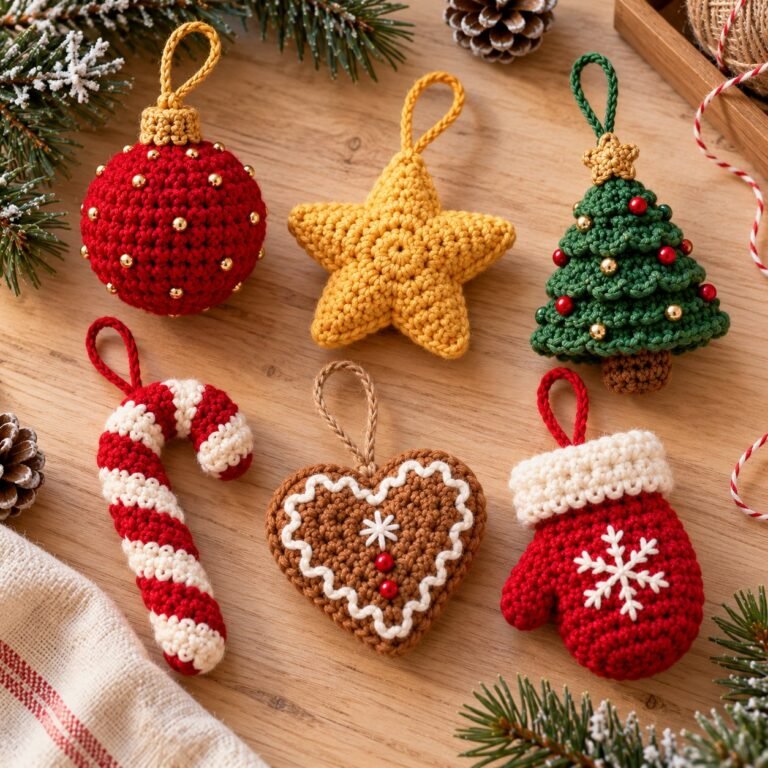
Try a quick seasonal project like our beginner crochet pumpkin, a classic granny square or a Christmas tree ornament — they use the same basic stitches.
Final Thoughts
Learning to crochet takes a little patience, but every stitch gets easier. Start with the chain and single crochet, make your first dishcloth, and before long you’ll be crocheting gifts and decorations. Bookmark this page, come back whenever you need a refresher, and explore our beginner tutorials for your next step. Happy hooking!
Leave a Reply