Standing in the yarn aisle feeling overwhelmed? Choosing the right yarn is one of the most important decisions for a new crocheter — the wrong yarn can make learning frustrating, while the right one makes every stitch easy to see and fun to work. This simple guide explains yarn weights, fibers, colors and labels so you can pick the best yarn for beginner crochet with confidence.
The Short Answer
For your first projects, choose a smooth, light-colored, worsted weight (#4) yarn in acrylic or cotton, and pair it with a 5.0 mm (H-8) hook. That’s it! Read on to understand why — and when to choose something different.
1. Yarn Weight: Start With Worsted (#4)
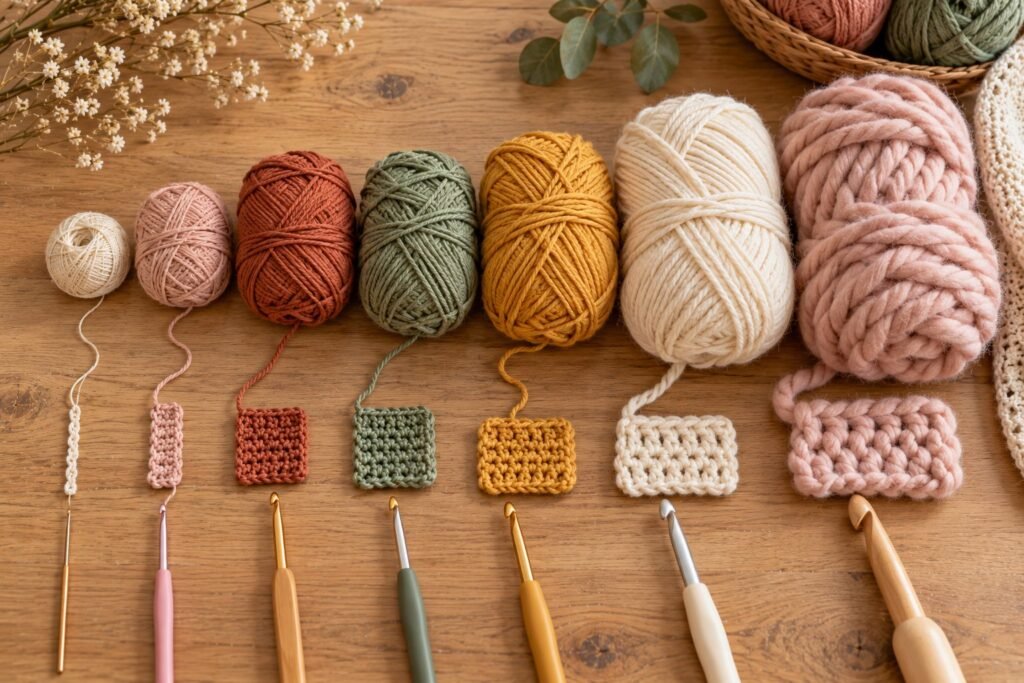
“Weight” means the thickness of the yarn. Most labels show a number from 0 to 7 using the Craft Yarn Council‘s standard yarn weight system:
| Number | Name | Typical hook size | Good for beginners? |
|---|---|---|---|
| 0 | Lace | 1.5–2.25 mm | No — very fine |
| 1–2 | Fingering / Sport | 2.25–4.5 mm | Not yet |
| 3 | DK / Light worsted | 4.5–5.5 mm | OK |
| 4 | Worsted / Aran | 5.5 mm–6.5 mm (often used with 5.0 mm) | Best choice |
| 5 | Bulky / Chunky | 6.5–9 mm | Good, fast results |
| 6–7 | Super bulky / Jumbo | 9 mm and up | Fun, but stitches are harder to count |
Worsted weight is thick enough to see each stitch clearly but not so thick that it’s clumsy to handle. It’s also the most common weight in beginner patterns.
2. Fiber: Acrylic or Cotton
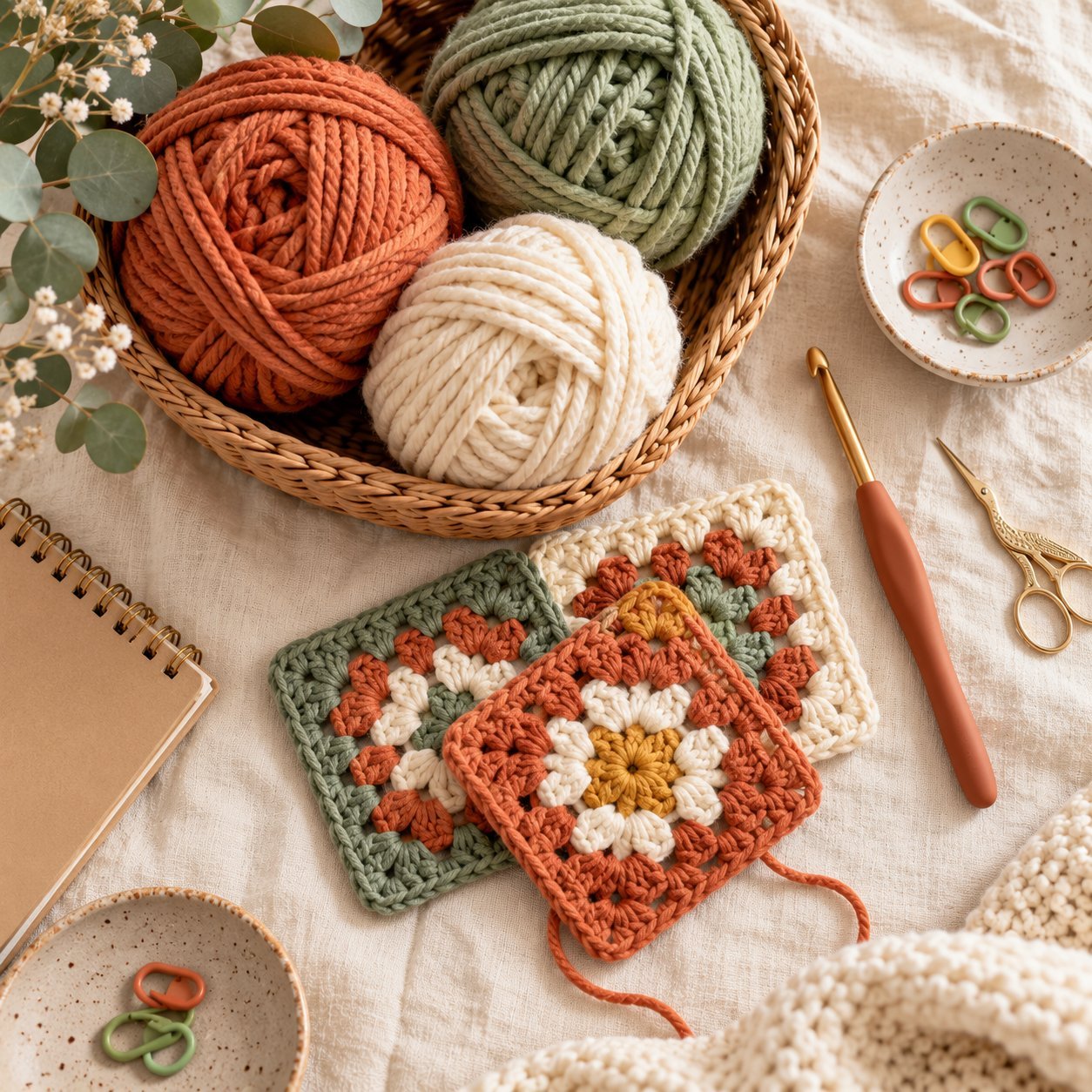
- Acrylic: affordable, soft, comes in every color, machine washable and forgiving. Perfect for practice, blankets, amigurumi and decorations.
- Cotton: smooth with great stitch definition and no stretch. Ideal for dishcloths, coasters, bags and summer tops. It can feel a little stiff on the hands at first.
- Wool: warm and elastic, lovely for hats and scarves — but it can felt in hot water and is usually more expensive. Better after you’ve learned the basics.
- Blends: acrylic-wool or cotton-acrylic blends combine the best of both and are great choices too.
3. Texture: Smooth Is Best
Choose a yarn that is smooth and tightly twisted (plied). It’s much easier to see where to insert your hook. Avoid these until you’re confident:
- Fuzzy or eyelash yarn (mohair, faux fur) — you can’t see the stitches.
- Chenille and velvet yarn — beautiful and trendy, but slippery and hard to count.
- Splitty yarn (loosely twisted strands) — your hook catches only part of the yarn.
- Bouclé or novelty yarns with loops and bumps.
4. Color: Light and Solid
Light, solid colors like cream, light gray, pastel pink or sage make every stitch visible. Very dark yarn (black, navy) and variegated multicolor yarns hide your stitches, making it hard to count and spot mistakes. Save them for your second or third project.
5. How to Read a Yarn Label
- Weight symbol — the yarn ball icon with a number (look for 4).
- Fiber content — e.g. 100% acrylic.
- Length and weight — yards/meters and grams/ounces per ball. Check your pattern’s yardage to know how many balls to buy.
- Recommended hook — a crochet hook symbol with a size (some labels only show knitting needles; add about 1 mm to the needle size or use the table above).
- Gauge — how many stitches and rows make a 4 in / 10 cm square.
- Dye lot — buy all balls for one project from the same dye lot so the color matches exactly.
- Care symbols — washing and drying instructions.
Best Yarn for Popular Beginner Projects
| Project | Best yarn | Why |
|---|---|---|
| Practice swatches | Light acrylic, #4 | Cheap, smooth, easy to see |
| Dishcloths & coasters | 100% cotton, #4 | Absorbent, sturdy, washable |
| Scarves & hats | Acrylic or wool blend, #4–#5 | Soft, warm, a little stretch |
| Blankets | Acrylic, #4–#5 | Soft, durable, machine washable |
| Amigurumi | Acrylic or cotton, #3–#4 | Holds shape, tight stitches |
| Home decor (pumpkins, ornaments) | Acrylic or cotton, #4 | Clear texture, holds shape |
Budget Tips
- Big-box craft store brands of acrylic yarn are affordable and great for learning.
- Watch for seasonal sales and coupons at craft stores.
- Buy one or two balls first to practice — you don’t need a whole stash on day one.
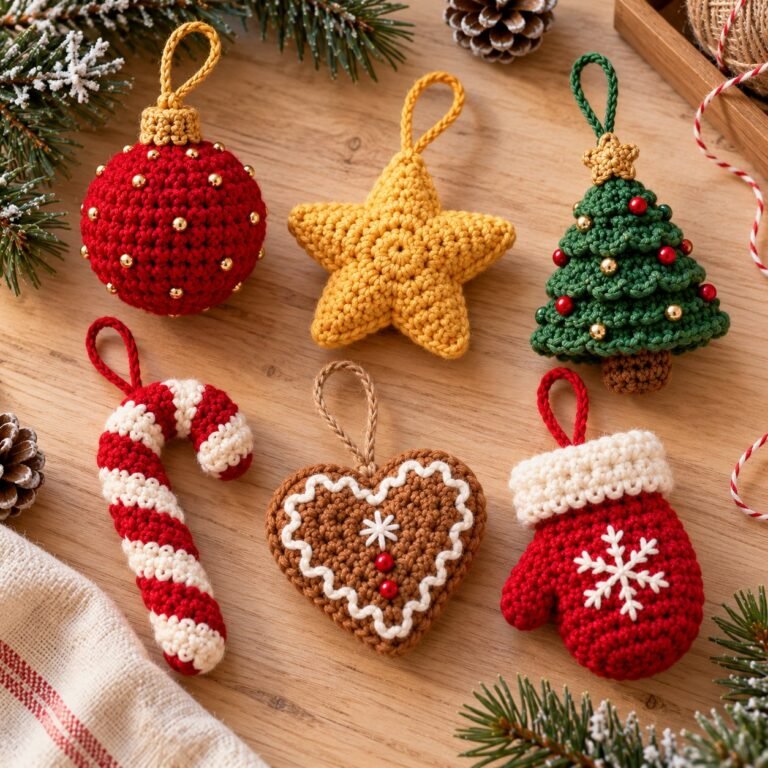
- Use leftovers for small projects like our crochet pumpkins or Christmas tree ornaments.
Found a mistake or stuck on a step? We check every stitch count carefully, but crochet is personal and tension varies. If something doesn’t work out for you, tell us here — we read every message and update our patterns.
Frequently Asked Questions
What is the easiest yarn to crochet with?
A smooth, light-colored worsted weight acrylic or cotton yarn. It’s easy to see, easy to hold and doesn’t split.
Is chunky yarn good for beginners?
Smooth bulky (#5) yarn can be great — projects grow fast and stitches are big. Just avoid super-fuzzy or chenille chunky yarns until you can count your stitches easily.
What hook size should I use with worsted yarn?
Start with a 5.0 mm (H-8) hook. If your fabric feels stiff, go up to 5.5 mm (I-9); for amigurumi, go down to 3.5–4.0 mm so the stuffing doesn’t show.
Can I use any yarn for any pattern?
For best results, use the yarn weight the pattern recommends. A different weight will change the size of the finished item and how much yarn you need.
Final Thoughts
The best yarn for beginner crochet is simple: smooth, light-colored, worsted weight acrylic or cotton with a 5.0 mm hook. Grab a ball, follow our step-by-step beginner crochet guide, and you’ll be making your first project in no time. Happy hooking!
Leave a Reply