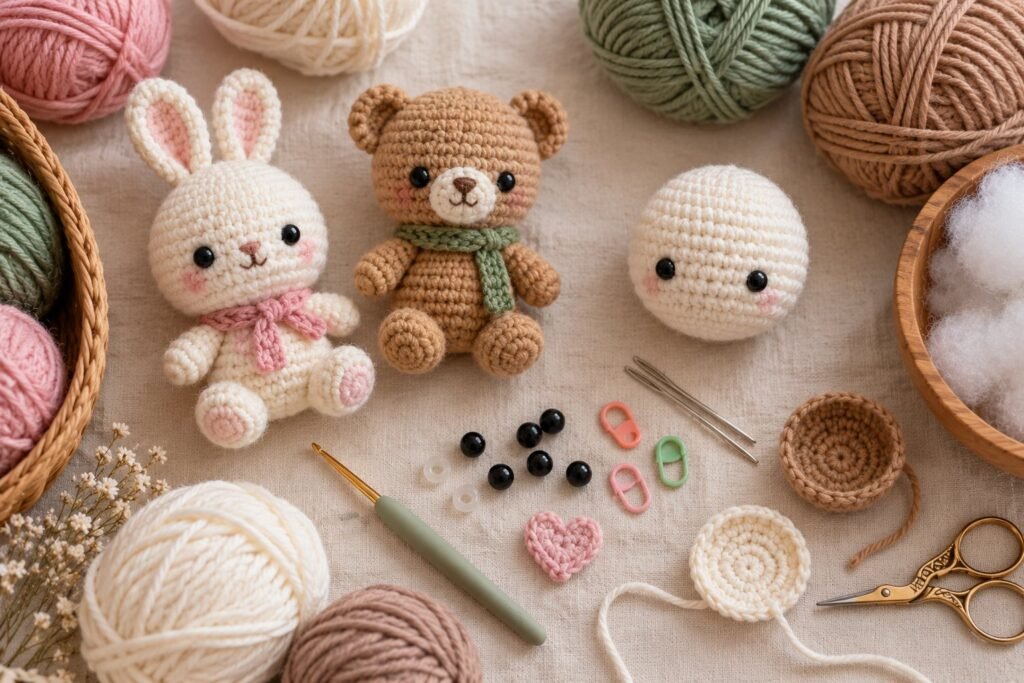
Amigurumi — the Japanese art of crocheting small stuffed toys — is one of the most popular crochet trends in the world. Cute animals, tiny ghosts, snowmen, food with faces… once you learn the basics, you can make almost anything. This amigurumi for beginners guide explains the tools, the core techniques and the simple math behind every round shape, plus a practice ball pattern and easy first projects.
What Is Amigurumi?
Amigurumi (pronounced ah-mee-goo-roo-mee) comes from the Japanese words ami (crocheted or knitted) and nuigurumi (stuffed doll). Most amigurumi are made from small pieces — spheres, cylinders and cones — worked in tight single crochet, stuffed and then sewn together.
Amigurumi Supplies
- Yarn: cotton or acrylic in DK (#3) or worsted (#4). Cotton gives crisp stitches; acrylic is softer and cheaper.
- Hook: 1–1.5 mm smaller than the yarn label suggests (for example, a 3.5 mm hook with worsted yarn) to make tight fabric that hides the stuffing.
- Stitch markers: essential for marking the first stitch of each round.
- Fiberfill stuffing (polyester).
- Safety eyes (6–12 mm) or embroidery thread for eyes.
- Yarn needle with a blunt tip for sewing pieces together, plus pins to position parts.
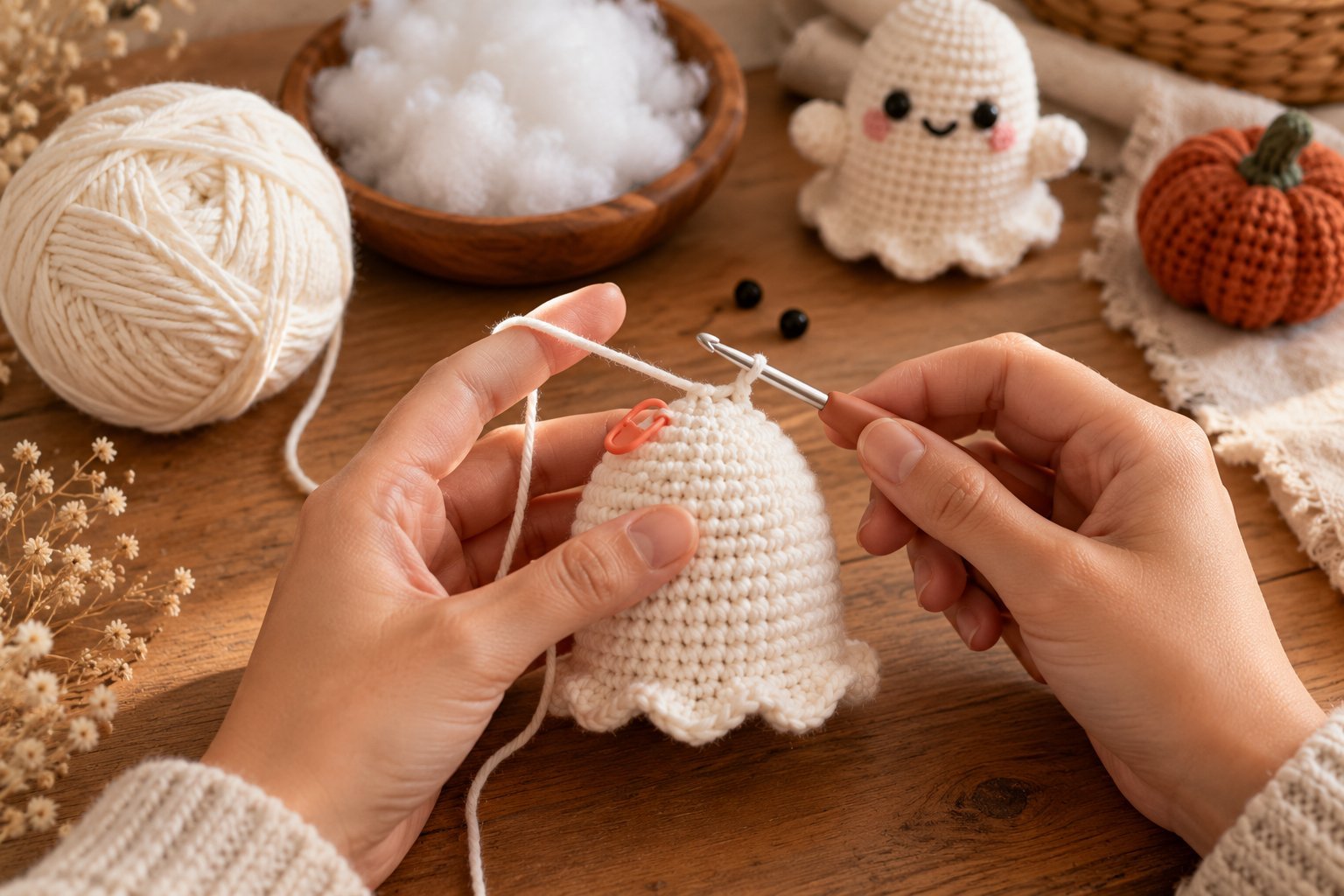
6 Essential Amigurumi Techniques
1. The Magic Ring
Almost every amigurumi piece starts with a magic ring so the center closes tightly. Follow our step-by-step magic ring tutorial.
2. Working in Continuous Spiral Rounds
Unlike most crochet, amigurumi rounds are usually not joined with a slip stitch. You keep crocheting in a spiral, which avoids a visible seam. Move your stitch marker up at the start of every round so you don’t lose count.
3. Increases (inc)
An increase is simply 2 single crochets in the same stitch. Increases make your piece grow wider.
4. The Invisible Decrease (dec)
Insert your hook into the front loop only of the next stitch, then the front loop only of the following stitch (3 loops on hook). Yarn over, pull through the 2 front loops, then yarn over and pull through both loops on your hook. This decrease is almost invisible — much neater than a regular sc2tog.
5. Yarn Under vs. Yarn Over
For extra-tight, neat “X”-shaped stitches, many amigurumi makers use the yarn under technique: grab the yarn from underneath instead of wrapping it over the hook for the first loop of each single crochet.
6. Stuffing and Closing
Stuff in small tufts, a little at a time, firmly but without stretching the stitches. Close the final 6 stitches by threading the tail through the front loops and pulling tight like a drawstring.
The Simple Math Behind Every Ball
Most round amigurumi shapes follow the same formula: start with 6 stitches and add 6 increases per round. Then work even rounds, and decrease the same way in reverse.
| Round | Instructions | Stitches |
|---|---|---|
| 1 | 6 sc in magic ring | 6 |
| 2 | inc x6 | 12 |
| 3 | (sc, inc) x6 | 18 |
| 4 | (2 sc, inc) x6 | 24 |
| 5–8 | sc around | 24 |
| 9 | (2 sc, dec) x6 | 18 |
| 10 | (sc, dec) x6 | 12 — stuff now |
| 11 | dec x6 | 6 — close |
This makes a ball about 2 in / 5 cm across with worsted yarn — the perfect practice piece. Want a bigger ball? Add one more increase round (3 sc, inc) x6 = 30, and one more even round for every increase round you add.
Beginner Tips for Neat Amigurumi
- Count every round — mistakes are easiest to fix immediately.
- Keep your tension tight and even. If stuffing shows, go down a hook size.
- Place safety eyes before closing and check them from every angle — they can’t be removed once the washer is on.
- Pin before sewing arms, ears and heads to get the placement right.
- Safety first: for babies and toddlers, always embroider eyes and avoid small parts.
Best First Amigurumi Projects
- Crochet ghost amigurumi — one ball shape plus a scalloped edge.
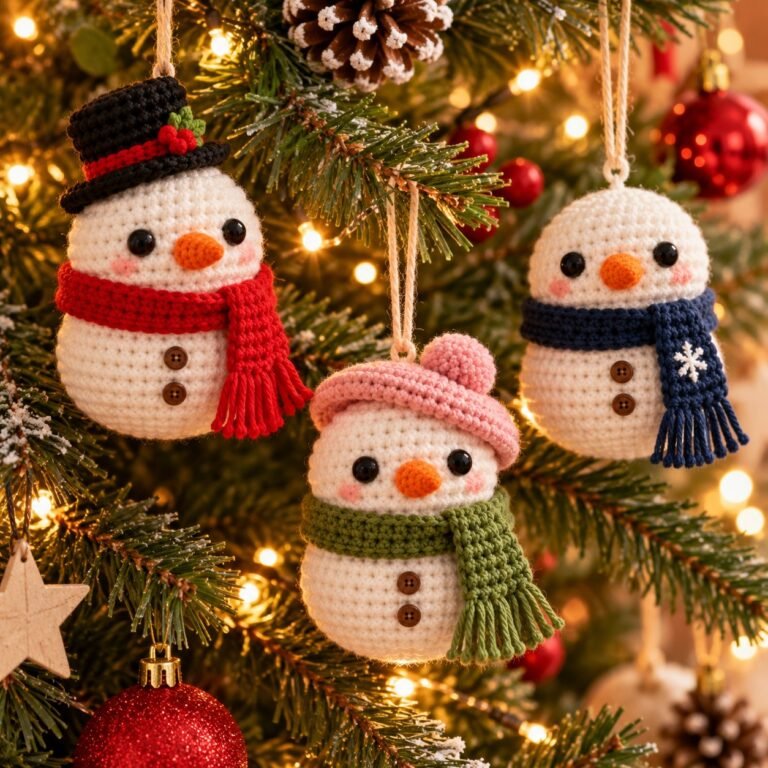
- Crochet snowman amigurumi — two balls, a hat and a scarf.
- Crochet pumpkin — no shaping, just a ribbed rectangle stuffed and cinched.
Found a mistake or stuck on a step? We check every stitch count carefully, but crochet is personal and tension varies. If something doesn’t work out for you, tell us here — we read every message and update our patterns.
Frequently Asked Questions
Is amigurumi hard for beginners?
No — amigurumi uses mostly single crochet. If you can make a single crochet, an increase and a decrease, you can make a ball, and most toys are made of balls and tubes. Learn the basics in our beginner crochet guide.
What’s the best yarn for amigurumi?
Smooth cotton or acrylic in DK or worsted weight. See our guide to the best yarn for beginner crochet.
Why does my amigurumi lean to one side?
Spiral rounds naturally drift slightly. Stack increases in the same position each round or stagger them (e.g. “inc, 2 sc” on alternate rounds) for a rounder shape.
Do I have to use safety eyes?
No. Embroidered eyes look lovely and are the safest choice for young children.
Final Thoughts
Amigurumi is one of the most rewarding ways to crochet: small, quick projects with huge personality. Make a practice ball today, then try our ghost or snowman pattern. Before long you’ll be designing your own little characters. Happy hooking!
Leave a Reply