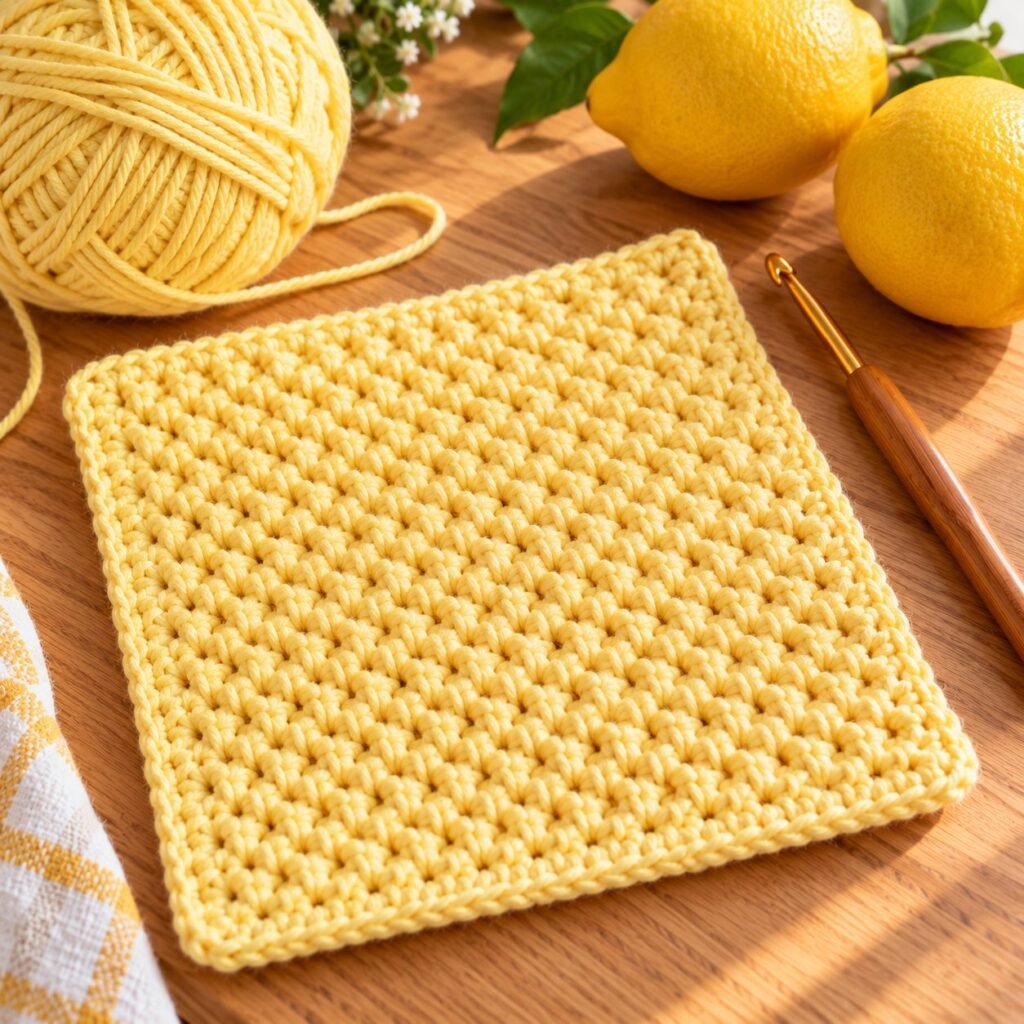
Two stitches you already know, one beautiful texture. The lemon peel stitch in crochet alternates single and double crochet to create a bumpy, dimpled fabric that looks just like the skin of a lemon. It is easy enough for beginners and perfect for dishcloths, scarves and blankets.
In this tutorial
What You Need
- Worsted weight (#4) 100% cotton yarn (about 60 yd / 55 m for the dishcloth)
- 5 mm (H-8) crochet hook
- Scissors and a tapestry needle
Abbreviations (US terms): ch = chain, sc = single crochet, dc = double crochet, st(s) = stitch(es). Need a refresher? See how to crochet for beginners.
What Is the Lemon Peel Stitch?
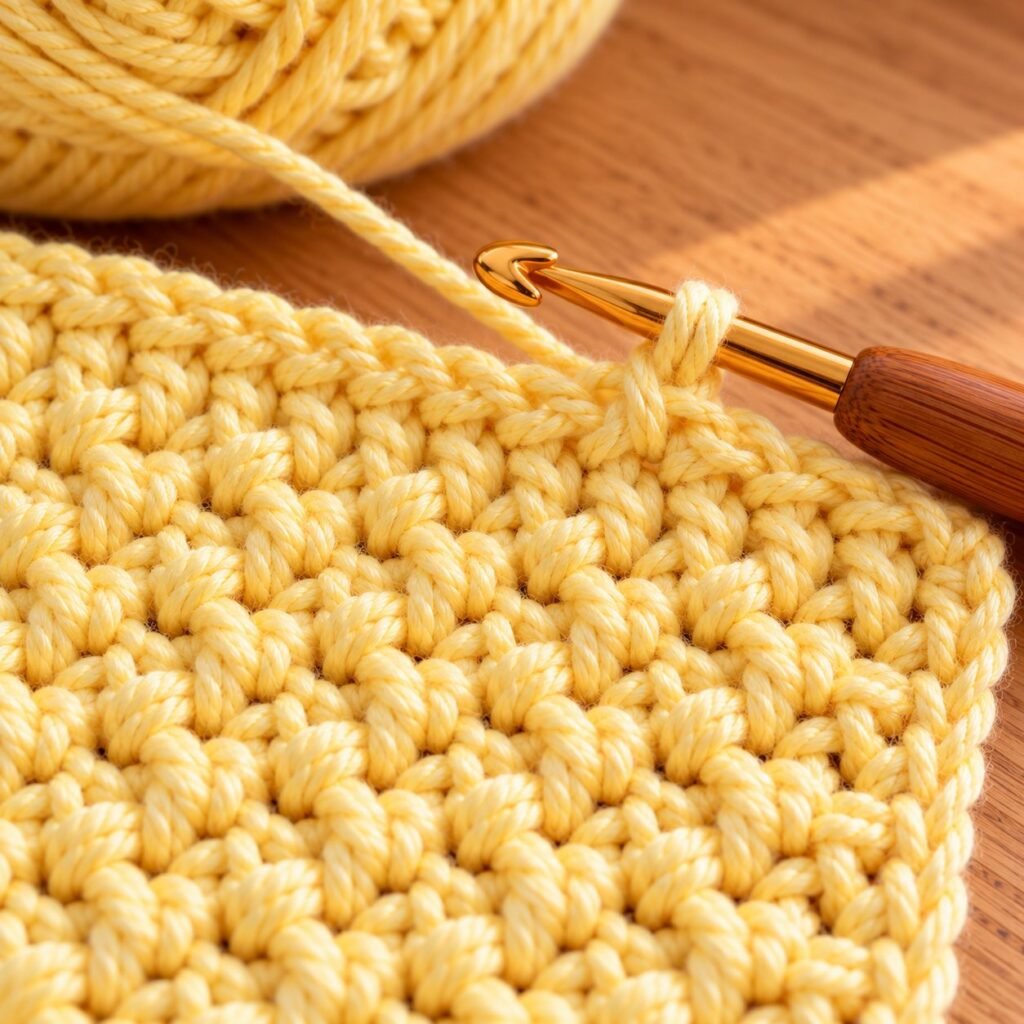
The lemon peel stitch is a one-row repeat of single crochet, double crochet. On every new row you place a single crochet on top of each double crochet and a double crochet on top of each single crochet. The short and tall stitches push against each other and form the little bumps.
It works on any even number of stitches, which makes it very easy to size up from a dishcloth to a scarf or a blanket.
How to Crochet the Lemon Peel Stitch
Foundation: Ch an even number of stitches plus 1. For a practice swatch, ch 21.
Row 1: Sc in the 2nd ch from the hook, dc in the next ch, *sc in the next ch, dc in the next ch* across. (20 sts, ending with a dc)
Row 2: Ch 1 (does not count as a stitch), turn. *Sc in the first st (a dc), dc in the next st (a sc)* across. (20 sts)
Repeat: Work Row 2 for the pattern. Always start with sc and end with dc.
Quick check: every row ends with a double crochet worked into the last single crochet of the row below. If you end on a single crochet, count your stitches – you need an even number.
Free Lemon Peel Stitch Dishcloth Pattern
Foundation: With cotton yarn, ch 31.
Row 1: Sc in the 2nd ch from the hook, dc in the next ch, *sc, dc* across. (30 sts)
Rows 2–24: Ch 1, turn. *Sc in the dc, dc in the sc* across. (30) The cloth should be about 7.5 in / 19 cm square; work more or fewer rows to make it square.
Border: Ch 1, sc evenly around all four sides, working 3 sc in each corner. Sl st to the first sc and fasten off.
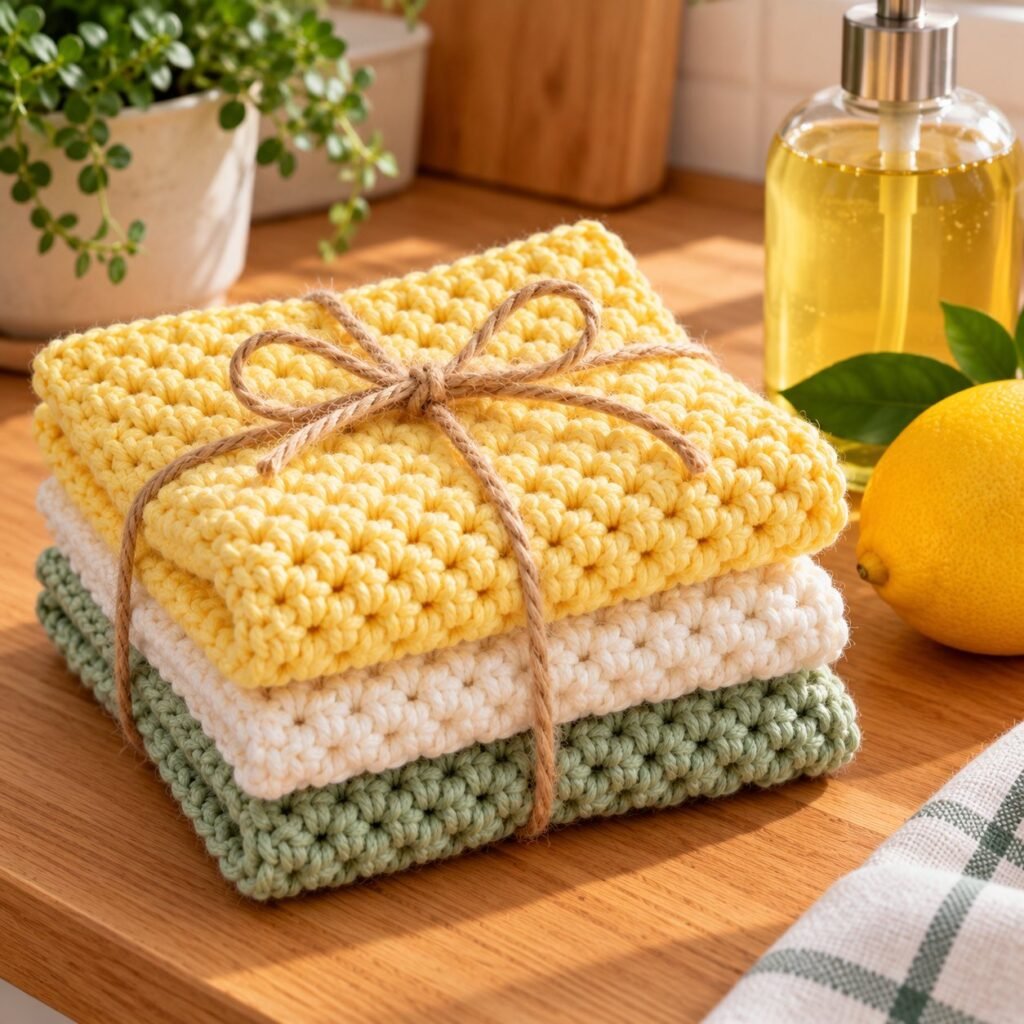
The bumpy texture is wonderful for scrubbing dishes. Make a set of three and tie them with twine for an easy gift, or use the stitch for our easy crochet infinity scarf.
Free printable version
Prefer paper? Download this free tutorial as a printable PDF to keep next to your yarn.
Keep crocheting
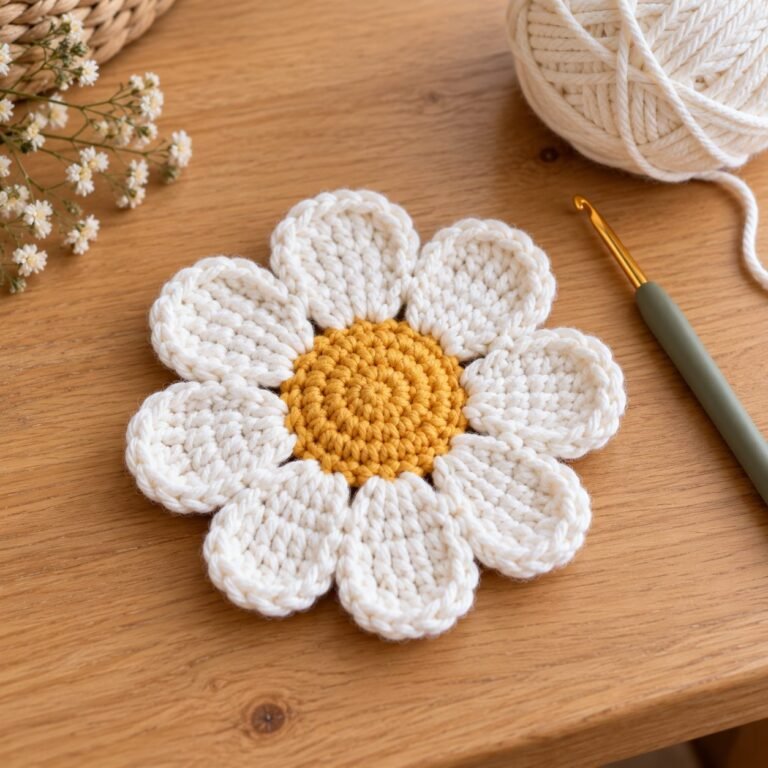
Your next free pattern: Free Crochet Flower Coaster Pattern (Easy Daisy Coaster for Beginners). Free crochet flower coaster pattern: an easy six-petal daisy coaster for beginners in 30 minutes, with color ideas and blocking tips.
Free pattern · step by step · US terms
Lemon Peel vs Suzette vs Moss Stitch
| Stitch | How it works | Texture |
|---|---|---|
| Lemon peel | Alternate sc and dc in separate stitches | Dense, bumpy |
| Suzette | (Sc, dc) in the same stitch, skip the next | Slanted, a little lacy |
| Moss (linen) | Sc, ch 1, skip the next stitch | Flat, woven look |
Frequently Asked Questions
Is the lemon peel stitch a yarn eater?
It is a dense stitch, so it uses more yarn than open stitches like the moss stitch. For a blanket, buy one extra skein to be safe.
What is the difference between lemon peel and Suzette stitch?
Both use sc and dc, but the Suzette stitch puts them in the same stitch and skips the next one, while the lemon peel stitch works them in separate stitches.
Is the lemon peel stitch good for blankets?
Yes. It is reversible, warm and does not curl. Chain any even number plus 1 for your blanket width.
Why does my fabric slant?
You may be starting a row with dc instead of sc. Always start each row with a single crochet into the first stitch.
Happy hooking! 🧶 Want more stitches? Try our half double crochet tutorial and the granny square.

Leave a Reply